As the global markets respond to the impact of COVID-19, we find ourselves in challenging financial times. Just 12 years after the 2008 markets signalled an impending financial crisis, we’re about to hit potentially in the deepest global recession in decades. (According to the World Bank).
In times like this, the need to maintain and improve financial health has never been more important.
What is financial health?
While there is no specific number or score that measures financial health, people with good financial health pay close attention to things like credit, debt, savings, retirement planning, and insurance. Financial health measures your ability to meet your financial needs and prepare for unexpected financial emergencies.
Financial health is fundamentally key to leading a happy and successful life. Creating a sound financial present does more than alleviate current stress – it lays the foundation for a stable and secure financial future. Poor financial health, which includes symptoms like low credit scores and little to no savings, can be bad for your physical and mental health. It can also put you and those who rely on you at risk.
Financial well-being now essential post-Covid
What impact has COVID-19 had on our financial health?
These are difficult times for everyone. The coronavirus outbreak is having a profound effect on people’s health – physical, mental, and financial.
The number of people who are anxious about their financial situation has more than doubled, from 16% before COVID-19 hit to 37%. Older generations are feeling more confident due to less debt and their reliance on pensions, while Millennials and younger adults, people with dependent children, and those who have been laid off are worrying more about their financial future.
Mullen Lowe Profero published research (August 2020) focusing on two communities who have been hardest hit this year: 18-25-year olds and small businesses. The survey finds the ability to absorb financial shock the critical worry affecting wellbeing and 40% of 18-25-year-olds are sometimes afraid to look at their bank account.
Other interesting findings include:
Over two-thirds of respondents are now demanding financial education to find peace of mind
40% of 18-25-year-olds say that thinking about their money has a negative impact on their wellbeing
The research highlights the 60% of the audience feel banks should help them have the capacity to absorb a financial shock.
More than half of 18-25 year olds agree that a bank’s role is now to: provide education on money management, help them keep on top of financial goals and help them save enough money to cope with the ups and downs of life
Finally, another push for a larger focus on financial inclusion
Financial inclusion is a key driver in tackling poverty and boosting economic growth. Yet a staggering two billion adults across the world still do not regularly use a bank account or have access to a financial institution via a mobile device.
Today, around 13 million of the lowest-income individuals in the UK – around 20 per cent of the population – are financially excluded by mainstream banks and lenders, who use traditional credit scores to assess creditworthiness, an approach typically unsuitable for these individuals.
Financial inclusion means ensuring access to bank accounts to everyone who needs one – including people with no permanent address. The move towards a cashless society is accelerating apace, but those without access to mainstream banking risk being left further behind. And financial inclusion also means not paying extra to access the same financial services as wealthier people.
Why aren’t banks serving these customers today? The most common reasons include:
- Lack of or inadequate education
- No valid identification
- Geographic challenges
- Financial products too expensive
- No credit history
What can we do here at YAN?
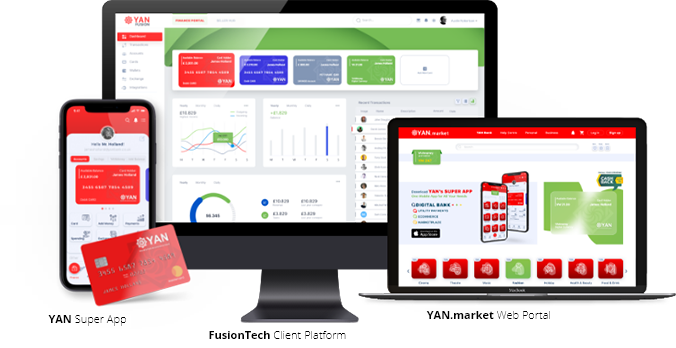
While these barriers can be significant, at YAN Bank, we believe technology now provides the means to overcome many of these challenges and will form a core component as we build our infrastructure today and in the future.
Through our products and services, we aim to considerably reducing costs (commissions) compared to traditional players by cutting out manual tasks and intermediate players through technology. Typical examples here are remittances (money transfers) and peer-to-peer lending.
As part of our business model, YAN will be leveraging e-commerce data for financial inclusion
YAN Bank will launch a YAN Money-101 series in an easy to use, accessible and jargon free format to help our customers get the most from their money.
Through tapping into digital ecosystems and smart technology, YAN are building an accessible Fusion Bank. To find out more, visit www.yanbank.co.uk